
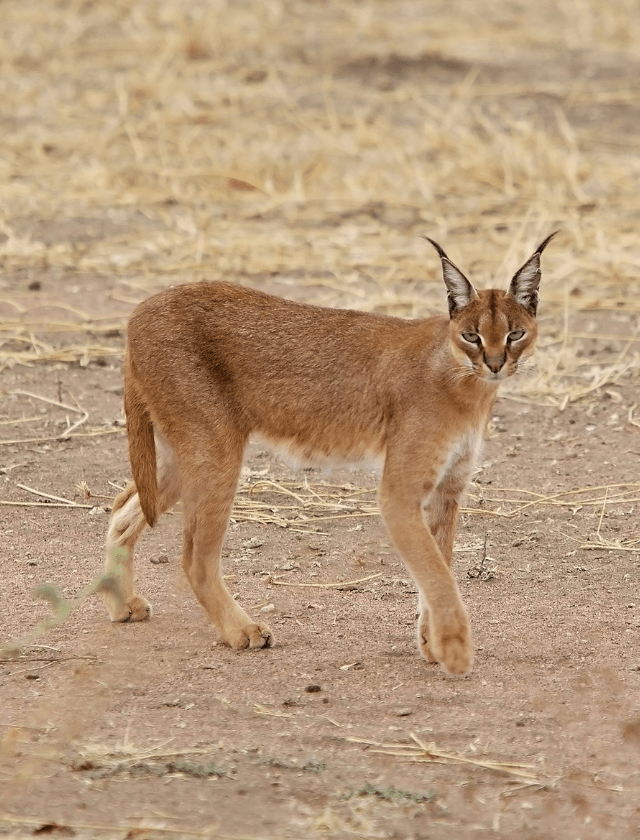
The African caracal is a medium-sized wild cat that is found throughout Africa and parts of the Middle East. Also known as the desert lynx or the Persian lynx, the caracal is a solitary animal that is known for its excellent hunting abilities and distinctive ear tufts.
Size: The African caracal is a medium-sized wild cat, with males weighing up to 18 kg (40 lbs) and females weighing up to 16 kg (35 lbs). They typically stand around 40 cm (16 inches) tall at the shoulder and are around 90 cm (35 inches) long from head to tail.
Dangerous to hunt: The African caracal is not considered to be a particularly dangerous animal to hunt, but they can be elusive and difficult to track due to their solitary nature and the fact that they are primarily active at night.
Habitat: African caracals are found throughout Africa, as well as parts of the Middle East, including Iran and Afghanistan. They are adapted to living in a variety of habitats, from arid deserts to forested areas and savannas. They are able to survive in both hot and cold weather conditions.
Activity: The African caracal is primarily active at night, but they can also be seen during the day. They are solitary animals, but they have been known to form pairs during the mating season.
Diet: The African caracal is a carnivore that primarily feeds on small mammals, birds, and reptiles. They are also known to hunt larger prey, such as gazelles and springbok. They are skilled hunters and are able to catch prey that is much larger than themselves.
The African caracal is known for its distinctive ear tufts, which are long black tufts of hair that extend upwards from the tips of their ears. These tufts help to improve the caracal’s hearing and also serve as a means of communication with other caracals.
In conclusion, the African caracal is a medium-sized wild cat that is found throughout Africa and parts of the Middle East. They are adapted to living in a variety of habitats and are primarily active at night. They are skilled hunters and primarily feed on small mammals, birds, and reptiles, but are also known to hunt larger prey. While not considered to be a particularly dangerous animal to hunt, they can be elusive and difficult to track due to their solitary nature and nocturnal activity.