
Hippo

The hippopotamus, or hippo for short, is a large semi-aquatic mammal found primarily in sub-Saharan Africa, known for their massive size, barrel-shaped bodies, and powerful jaws. Despite their vegetarian diet of mostly grass, they are considered to be one of the most dangerous animals in Africa due to their territorial behavior and aggressive nature.
Giraffe
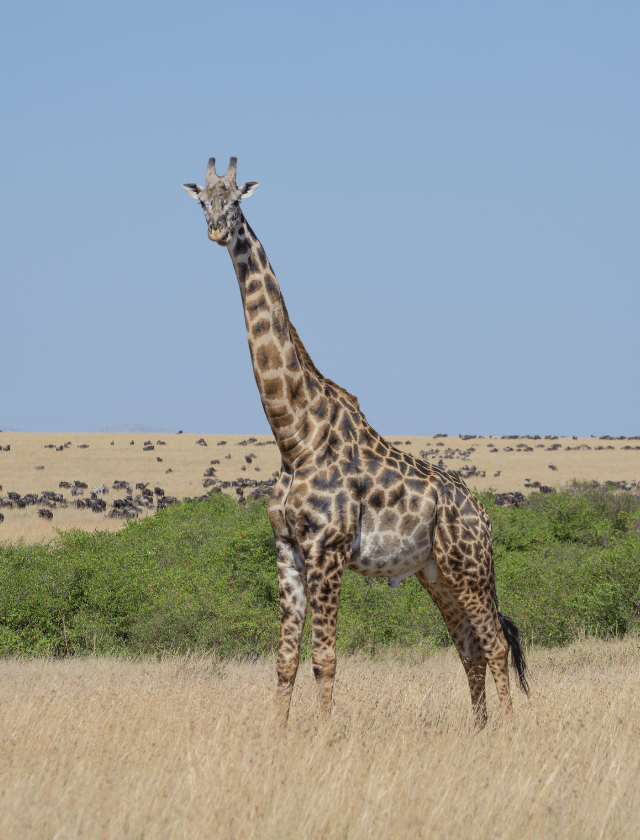
The giraffe is a tall, long-necked mammal found primarily in savannas and grasslands of Africa, known for their unique and unmistakable appearance. They are herbivorous animals that feed on leaves and buds from trees, and are known for their long necks, spotted coat, and distinctive ossicones, which are horn-like structures on their heads.
Gemsbuck
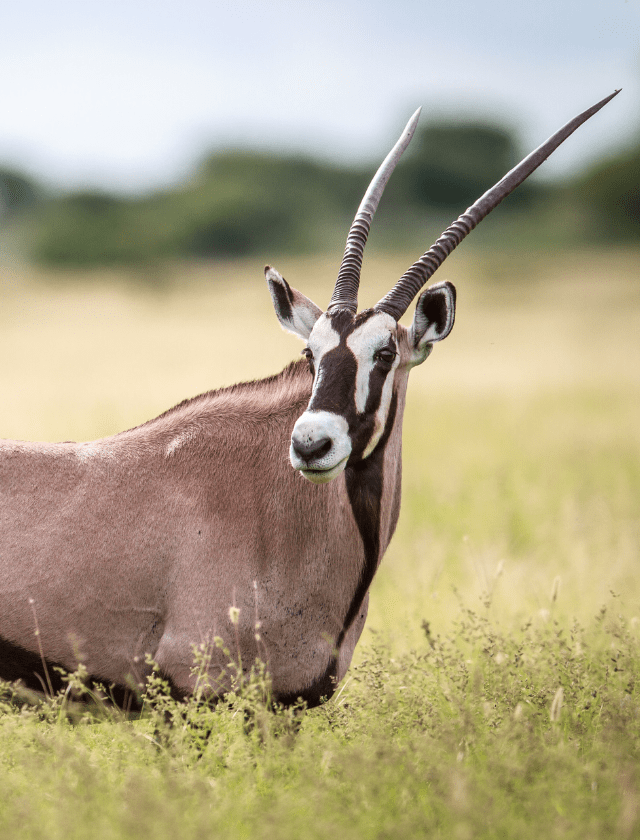
The gemsbok, also known as the South African oryx, is a large antelope species found in the arid regions of Southern Africa. Known for its striking appearance, with long, straight horns and distinctive black and white facial markings, the gemsbok is well-adapted to surviving in harsh, dry environments.
Elephant

The elephant is the largest living land animal, with two distinct species – the African elephant and the Asian elephant. These highly intelligent and social animals are known for their iconic appearance, including their long trunks and massive tusks.
Eland (Cape)

The eland is a large species of antelope found in various parts of Africa. Known for its impressive size and spiral-shaped horns, the eland is a herbivorous animal that can weigh over 1,000 kg and is able to jump up to 2.5 meters high.
Duiker (Common)

The duiker is a small to medium-sized antelope found in different habitats across sub-Saharan Africa. Despite its size, the duiker is known for its remarkable agility and the ability to dive and hide in dense vegetation to escape predators.
Bushpig

The bushpig is a medium-sized wild pig found throughout much of sub-Saharan Africa. With their coarse, bristly hair and sharp tusks, bushpigs are omnivores that feed on a variety of foods, including roots, tubers, fruits, and small animals.
Bushbuck

The bushbuck is a medium-sized antelope found in forests and woodland habitats across sub-Saharan Africa. Known for their striking appearance, with shaggy coats and spiral-shaped horns in males, bushbucks are primarily browsers and feed on leaves, shoots, and fruits.
Buffalo

The African buffalo, also known simply as the buffalo, is a large and formidable mammal native to Africa. They are characterized by their robust build, dark brown to black coat, and distinctive, sweeping horns. African buffaloes are known for their social behavior and can be found in herds across various African habitats.
Wildebeest (Blue)

The blue wildebeest, also known as the brindled gnu, is a large antelope species found in the grasslands of eastern and southern Africa. They are known for their distinctive blue-gray coat with black stripes, curved horns, and muscular build, and are an important prey species for many predators.
Blesbuck (White)

The white blesbuck is a color variation of the blesbok antelope species, with a predominantly white coat and distinctive white face blaze. It is a selectively-bred captive animal that is not found in the wild, and is often hunted for its striking appearance.
Blesbuck (Common)

The blesbok, or blesbuck, is a medium-sized antelope species native to South Africa. It is known for its distinctive white face blaze and horns that curve backwards, as well as its reddish-brown coat with a white belly and rump.
Wildebeest (Black)

The black wildebeest, also known as the white-tailed gnu, is a large antelope species found in the grasslands of southern Africa. They are known for their dark brown to black coat, long, curved horns, and distinctive beard-like tuft of hair on their chins.
Zebra (Burchells)
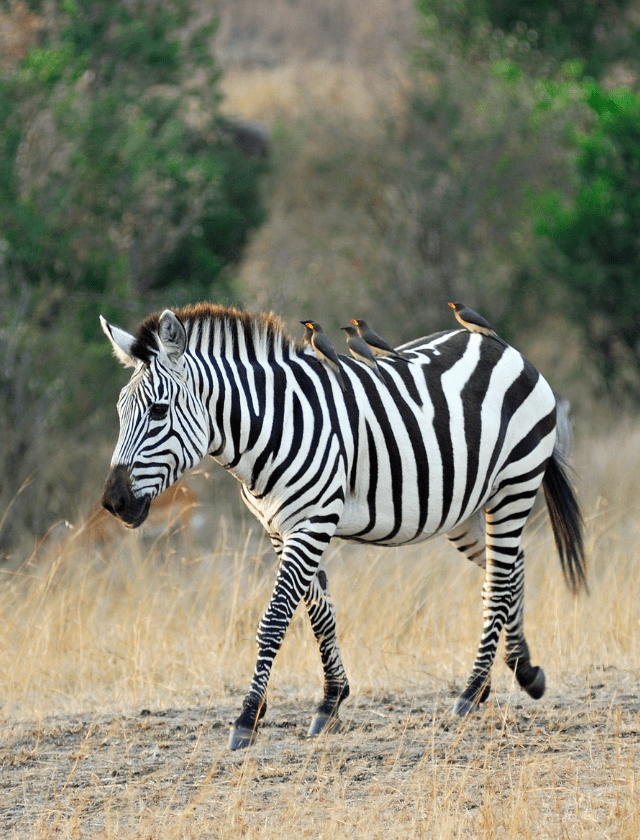
Zebras are herbivorous animals known for their black-and-white striped coats. They are social and live in groups, using their stripes to confuse predators and identify each other, and can run up to 40 miles per hour when threatened.